
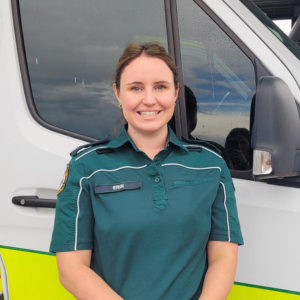
Erin Mengler is an Ambulance Manager, Ambulance Paramedic and Clinical Educator based in Canberra, with a strong commitment to staff welfare and professional development in paramedicine. She leads initiatives that support clinician wellbeing, resilience, and psychological safety, recognising their critical impact on sustainable workforce performance. Erin is passionate about delivering high-quality education that equips paramedics with the skills and confidence to provide safe, evidence-based care. Combining operational leadership with a people-focused approach, she advocates for supportive workplace cultures and continuous learning to enhance both clinician experience and patient outcomes in the prehospital setting.
Managing menstruation in an ambulance health service: early findings of workforce considerations
Ms Erin Mengler2, Ms Lisa Hobbs3, A/Prof. Louise Reynolds1, Professor Scott Devenish3
1Australian Catholic University, 2ACT Ambulance Service, 3Australian Catholic University
Abstract:
Situation
Since 2019, the Australian paramedic workforce data has shown the increased female representation from 41.2% to today with greater than 50% in some jurisdictions representing an increased feminisation of the industry.
Women* working in the ambulance environment can be negatively impacted by their menstruation causing interruptions or early completion of their shift. Reasons include pain/discomfort, heavy periods, leakage and trouble accessing a bathroom and/or sanitary items and appropriate disposal facilities. To manage menstruation, some women in the ambulance sector use Hormonal Contraception (HC) in order “to make it easier for me to work in the paramedic environment”.
There is very little research regarding the how women* in ambulance settings can be supported to manage their menstruation and operational roles.
Task
To investigate the impact of menstruation for female paramedics in the paramedic/ambulance environment when undertaking workplace duties.
Action
To address this gap, one jurisdictional service is providing menstruation support kits consisting of tampons, sanitary pads and waste disposal bags on every operational ambulance vehicle and ambulance station, communications centre and headquarters. Participants have been invited to complete an anonymous online survey of Likert scale and free text options about their use of menstruation support kits as it relates to their role. Human research ethics have been granted for this project.
Results
This presentation will detail the process undertaken and early results from the initial analysis of the surveys completed to date.
*Note on language: women describes those who were assigned female at birth