
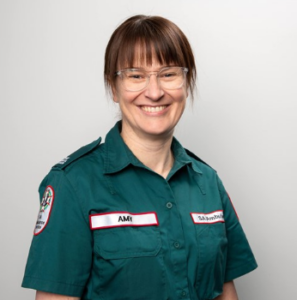
A/Prof. Amy Keir1,2, Ms Catherine Wright1, Ms Stacey Solomou1, Ms Michelle Thomson1,2, Mr Joseph Schar1, Mr Damien Norsworthy1, Mr Keith Driscoll1
1SA Ambulance, Eastwood, Australia, 2University of Adelaide, Adelaide, Australia
A/Professor Amy Keir MBBS MPH FRACP PhD is the SA Ambulance Chief Medical Advisor and is working on implementing an organisation-wide quality improvement program. Amy has extensive experience in healthcare services research and clinical practice improvement.
Presentation Title and Overview: Implementation of a quality improvement program in SA Ambulance using the Evidence-based Practice for Improving Quality (EPIQ) approach
Introduction: Quality improvement (QI) aims to make a difference to patients by improving safety, effectiveness, and healthcare experience through understanding our environment, applying a systematic approach, and designing, testing, and implementing changes using real-time measurements. Our study aims to apply improvement science to implement a QI improvement program in SA Ambulance.
Methods: We are implementing an organisational-wide QI program using the Evidence-based Practice for Improving Quality (EPIQ) program, which includes Plan-Do-Study-Act (PDSA) cycles. Our first PDSA cycle is focused on developing QI resources, PDSA cycle 2 is the rollout of QI training workshops, and PDSA cycle 3 is the facilitation of QI projects. Our process measures include number of QI workshops run for staff, number of staff undertaking at least one QI workshop, number of staff trained as facilitators. Outcomes measures include staff satisfaction scores after completing a QI workshop, and the number of projects commenced and completed. We have institutional approval for the project.
Results: Since commencement in September 2023, the number of QI workshops run for staff (n=2), the number of staff undertaking at least one QI workshop (n=20) and the number of staff trained as QI facilitators (n=4). For outcome measures, we have had positive feedback through formal staff evaluation for the QI workshops and have commenced QI projects (n=3) across the organisation.
Conclusion: Though in its early stages, the implementation of our SA Ambulance QI program shows signs of success with workshops underway, facilitator development and QI projects commenced.