
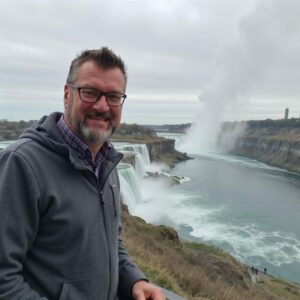
J.D. is a husband, father, son, brother, uncle, dog owner, leader, chronic networker, researcher, and student whom happens to be a Paramedic. As a second career Paramedic he has worked as a front-line Advanced Care Paramedic, Paramedic educator, Community Paramedic, and at various levels of Paramedic service leadership. His passion and interests are Community Paramedicine, Paramedic practice focussing on vulnerable populations, Paramedic identity, culture, international trends and best practices with a love for networking with like-minded individuals and organisations.
He serves as the Canadian representative on the Board of Directors with the International Roundtable on Community Paramedicine and the Paramedic Foundation, while locally serving on the Board for the Ottawa Valley Family Health Team.
When not on leave, he is employed full time as the Chief Paramedic for the Government of Canada in the department of Indigenous Services Canada as well J.D. maintains a casual position on the leadership team with the County of Renfrew Paramedic Service.
J.D. has led projects, led research, and spoken on a myriad of topics locally, nationally and in the United States, Turkey, Germany, Ireland, Australia, England, Scotland, and Wales.
Off the Road less travelled – Indigenous Community Paramedicine and Culturally Appropriate Education Models
Abstract
Since its inception, paramedic education and clinical practice in Canada have largely followed traditional colonial frameworks. These models have not provided Indigenous peoples with accessible pathways to pursue paramedicine as a career—particularly in remote and isolated communities—where leaving traditional territory has often been the only option for education and training.
As a result, paramedicine has rarely been viewed as a viable career opportunity within these communities. Recruitment of paramedic students from remote Indigenous regions has long been a challenge.
Several educational models seeks to change that. By training local First Nations members in paramedic practice through non-traditional, culturally responsive pedagogical approaches, we aim to empower practitioners to serve within their own communities. This approach fosters the delivery of appropriate, culturally relevant care and supports the recruitment and retention of Indigenous students who will become paramedic professionals and leaders.
Ultimately, this model offers a sustainable, long-term solution to the shortage of paramedics in emergency response and Community Paramedic primary care settings. It also contributes meaningfully to the broader health transformation agenda and supports reconciliation efforts by aligning healthcare delivery with the needs and values of Indigenous communities across Canada.