
Vanessa Bell
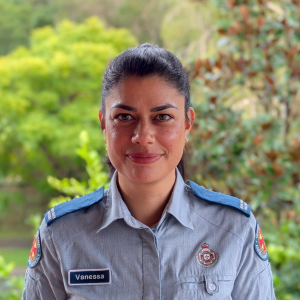
Vanessa is a mental health clinician based in Brisbane who has dedicated most of her career to working with adults who experience moderate to severe mental illness that live in the community. She has a strong interest in patient-centred care, crisis response and reducing barriers to accessing health care. Vanessa has worked for the National Health Service (UK), Queensland Health, Wesley Mission Queensland and since 2022 has been an active member of the Queensland Mental Health Review Tribunal. Vanessa holds a Bachelor of Social Work, Post Graduate Certificate in Mental Health and Master of Nursing Studies.
Emily Cloumassis
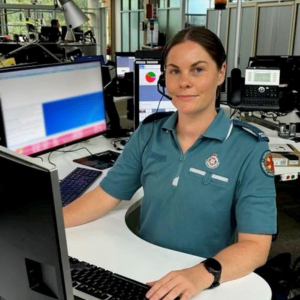
Emily Cloumassis is a Brisbane based mental health nurse with experience in acute inpatient, community, education and assessment settings. She holds a Bachelor of Nursing and Master of Mental Health Nursing. Emily has a special interest in emergency mental health care and crisis management and is hoping to explore further research in these areas.
WHAT HAPPENS WHEN AN AMBULANCE SERVICE EMPLOYS ITS OWN MENTAL HEALTH CLINICIANS?
Ms Vanessa Bell1, Ms Emily Cloumassis1, Dr Verena Pritchard, Mr Steve MacIntyre1, Mrs Sandra Garner1
1Queensland Ambulance Service
Abstract:
Background: Triple Zero (000) calls for mental health emergencies encompass diverse biological, social, and psychological factors, requiring first responders to address the complexities of mental distress. Recognising the need for specialised MH care, the Queensland Ambulance Service (QAS) established the Mental-Health-Liaison-Service (MHLS) in 2020. Based in the Operations Centre, QAS employed MH-clinicians review all MH incidents across Queensland and provide 24/7 real-time support to paramedics and to people who call Triple Zero in crisis.
Methods: A mixed-methods evaluation assessed the MHLS’s impact on MH incident management. QAS paramedics and MH-clinicians completed an online survey, and a retrospective chart audit of 200 MHLS-reviewed incidents over a 24-hour period was conducted.
Results: Of 146 paramedics surveyed, one-third reported using it weekly, primarily for suicide-related and youth MH cases to support their clinical assessment and decision making. Paramedics valued the immediacy of specialist advice, access to patient history, and risk mitigation. Over 81% reported satisfaction with advice provided, citing reduced stress and improved confidence and assessment skills. Of 17 MH-clinicians surveyed, 94% found the role professionally rewarding, highlighting real-time support, autonomy in practice, and a collaborative team environment as key strengths which enhanced their scope to provide patient-centred care. The chart audit revealed that 9% of dispatches were diverted, 25% of patients remained at home, and only 19% reengaged with QAS within seven days.
Conclusion: This evaluation demonstrates the MHLS’s success in bridging the gap between emergency response and MH care, offering a scalable model for improving MH crisis response in other jurisdictions.