
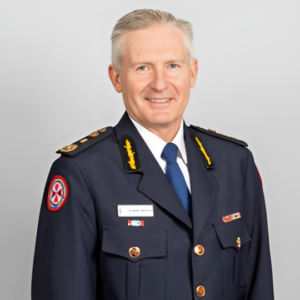
Dr Dominic Morgan ASM, Commissioner and Chief Executive, NSW Ambulance
Adjunct Associate Professor Dominic Morgan has over 30 years of ambulance experience across a broad range of roles in the areas of operations, clinical practice and leadership within Ambulance Services and the Financial Sector. After commencing his career with NSW Ambulance, he was appointed as Chief Executive Officer of Ambulance Tasmania in 2009 and returned to NSW Ambulance in 2016 as Chief Executive and Commissioner.
He is a Board member and Chair of The Australasian Council of Ambulance Authorities, the peak body representing the Ambulance sector in Australia and New Zealand and he has also chaired a number of international sub-committees. He is also a member of the Ambulance Service Advisory Board.
Dr Morgan has a number of professional affiliations including Adjunct Associate Professorship with the University of Technology, Sydney, as well as being a Registered Paramedic.
Dominic holds a Diploma in Education, Bachelor of Health Science and a Master of Business Administration. He completed his PhD in 2018, undertaking a study into the factors that influence early access to defibrillation following out-of-hospital cardiac arrest.
Patient Streaming
Dr Dominic Morgan ASM1
1Commissioner and Chief Executive NSW Ambulance
Abstract
The NSW Ambulance Chief Executive will outline how NSW Ambulance is building on its Virtual Clinical Care model to further refine patient streaming. This session will highlight how NSW Ambulance has evolved from being viewed as a cost to the health system to becoming a pivotal player in demand management across the NSW Health system. NSW Ambulance is currently responsible for 25-30% of all emergency department presentations and serves as the critical ‘front door’ to healthcare, answering nearly 1.2 million unique triple zero calls last year. With 8,000 staff operating within a 160,000-strong NSW Health workforce, NSW Ambulance’s ability to triage patients effectively—through advanced referral pathways, unique models of care and world-class transfer-of-care protocols—positions the organisation well to play a key role in achieving whole of health system efficiencies.
This address emphasises the need to scale geographically equitable, integrated referral networks and integrate with broader health system resources to optimise demand management. By redefining the organisation as a mobile health service with multiple patient streaming options, allows for a reframing by staff, stakeholders, funders and consumers alike.