
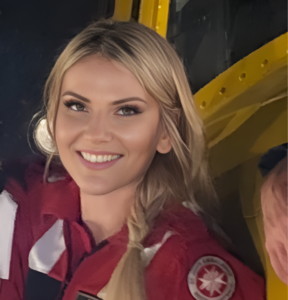
UK trained FACEM with dual accreditation in Emergency and Pre-hospital Medicine. Previous background in Psychology prior to studying medicine. I have post graduate qualifications in Toxicology, Clinical Education, Pre-hospital and Retrieval Medicine, Medical administration and Trauma Sciences. My passion has always been pre-hospital care and I have over 18-years experience working with HEMS services in the UK, as well as motorsport medicine and road-based rapid response vehicles before moving to Australia in 2011 and spending 7 years with RFDS part-time whilst maintaining a substantive role as an ED Consultant at Sir Charles Gairdner Hospital in Perth. I took up the post as Deputy Medical Director with SJAWA in 2020 working with and developing the Critical Care Paramedic group. This includes the development of a bespoke 2-year internship training program nd ongoing competency framework specific to the demands of the CCP group. In 2022 I took up the role as Medical Director and will continue to strive for excellence in training, education and clinical practice across the board. I play as hard as I work – competing in ultramarathons in my ‘spare time’ and doting on my rescue dog.
Presentation Title and Overview: No NEWS is not good News
The health care sector, including ambulance, faces challenges maintaining a workforce to meet increasing demand across an aging population, resulting in a younger workforce who often have less time in preparatory training.
We must consider how to influence, design and implement contemporary training and education whilst supporting a younger workforce who require appropriate clinical support and mentorship to bolster their often fast-tracked training and mitigate lower levels of clinical exposure. Paramedics are now also expected to manage their patients for prolonged periods of time, recognise sometimes subtle changes in patient condition and escalate these appropriately to hospital staff in a shared language to facilitate timely intervention and improve patient outcomes. Recognising and responding to the deteriorating patient is a hot topic in paramedicine with several high-profile cases hitting the media and has led to services exploring how to best support our workforce in this area.
Early warning scores have been used in the hospital system for many years but are only starting to gain momentum in the pre-hospital space. On the back of increasing clinical incidents relating to patients deteriorating whilst on the ramp and not being recognised or escalated appropriately SJAWA introduced the NEWS2 score to practice with some early signs of positive impact.
The hope is that the introduction of Early Warning Scores across ambulance service will go some way to mitigating the risks inherent in ramping, and improving communication and escalation between prehospital and hospital health care professionals.